


You’ve probably pictured it already: a quiet Sunday morning on your own land, trees you planted growing taller every season, your children running barefoot on real soil. Then the doubt creeps in like, “This is a big decision. The big names are familiar. How do I know a focused project like Mount Quintaa is the right choice?”
That’s a fair question, and the best one you can ask. Buying farmland isn’t like buying a gadget. You’re trusting someone with your savings, your weekends and, often, your family’s legacy. So we won’t ask for blind faith. In this post, we’ll show you exactly how to check Best Own Agriculture Farmland in Bangalore, what the law in Karnataka actually says, and why a smaller, focused team can sometimes give you more certainty than a big logo.
Let’s walk through it together.
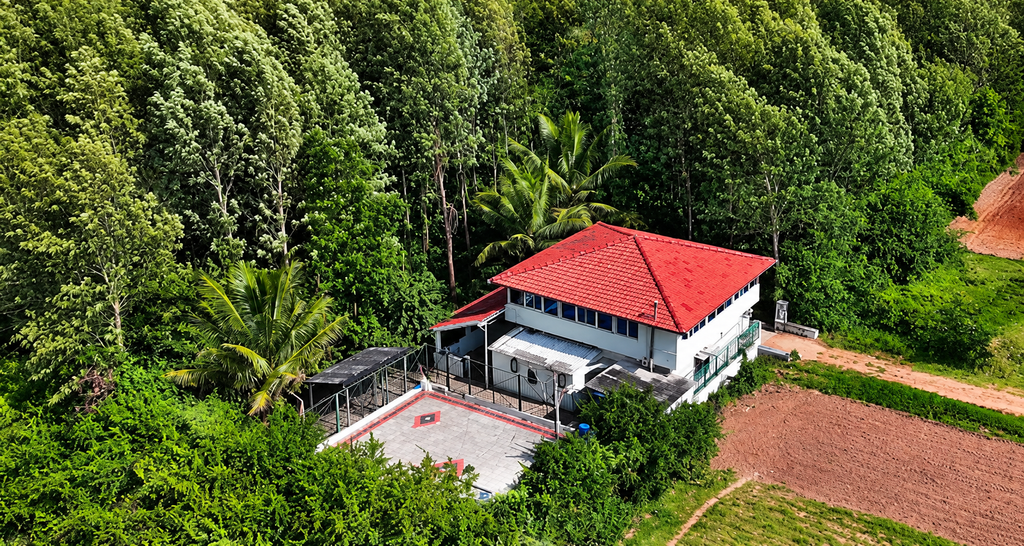
Trust Starts with a Simple Truth: You Shouldn’t Have to Take Our Word for It
Brochures can say anything. Documents can’t. Our approach is simple: every claim we make should be one you can verify yourself, on government portals, with your own lawyer, and on the land itself.
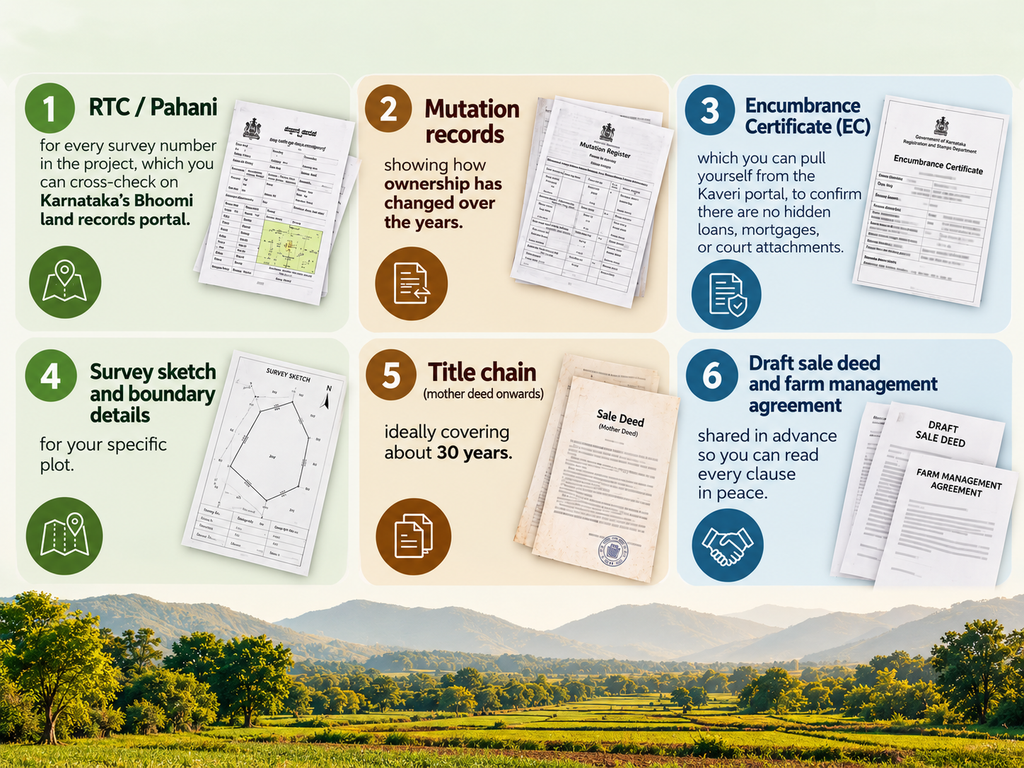
Here’s what we put in your hands before you pay a single rupee of token amount to the Own farmland in Bangalore.
- RTC / Pahani for every survey number in the project, which you can cross-check on Karnataka’s Bhoomi land records portal.
- Mutation records showing how ownership has changed over the years.
- Encumbrance Certificate (EC), which you can pull yourself from the Kaveri portal, to confirm there are no hidden loans, mortgages, or court attachments.
- Survey sketch and boundary details for your specific plot.
- Title chain (mother deed onwards), ideally covering about 30 years.
- Draft sale deed and farm management agreement, shared in advance so you can read every clause in peace
If any project, big or small, hesitates to share these before collecting money, treat that as your answer.
What the Law Really Says (So You Can Invest with Clarity)
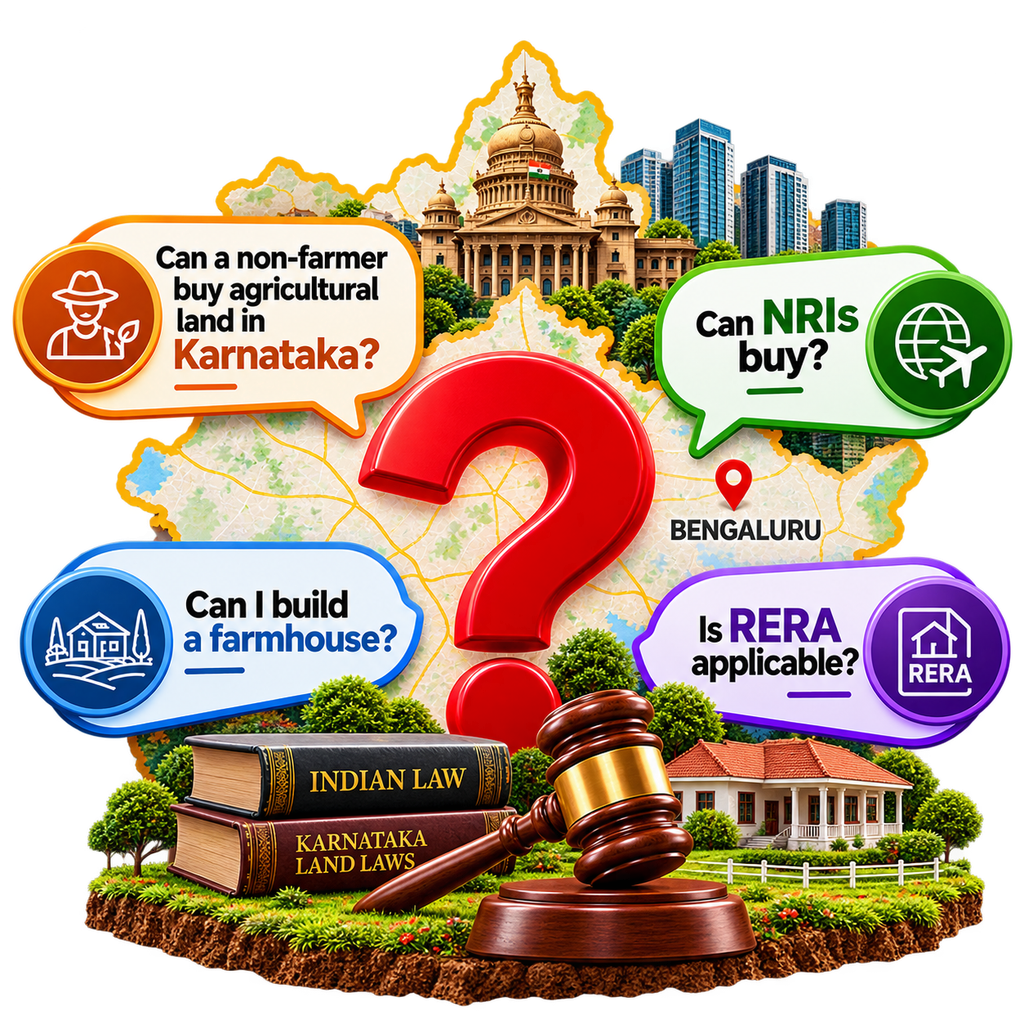
A lot of hesitation around farmland comes from old rules people half-remember. Here’s the current picture in plain language:
1. Can a non-farmer buy agricultural land in Karnataka? Yes. The Karnataka Land Reforms (Amendment) Ordinance of 13 July 2020 repealed Sections 79A, 79B and 79C of the Karnataka Land Reforms Act, 1961. As PRS Legislative Research explains, the old law blocked the sale of farmland to anyone “having an assured annual income of Rs 25 lakh or more from non-agricultural sources”, and the ordinance removed that rule retrospectively. Today, resident Indian citizens can buy agricultural land in Karnataka, subject to the ceiling limits that still apply.
2. Can NRIs buy? Honestly, no, not directly. Under FEMA, NRIs and OCI cardholders can’t purchase agricultural land, plantation property or farmhouses in India, whatever a state’s own rules allow. We’d rather tell you this upfront than lose your trust later.
3. Can I build a farmhouse? Buying agricultural land doesn’t by itself give you permission to build. Building requires conversion under Section 95 of the Karnataka Land Revenue Act, 1964 (commonly called DC conversion) and the relevant approvals.
4. Is RERA applicable? This depends on how a project is structured. A genuine sale of agricultural land that stays agricultural is generally treated as outside RERA. Projects that sell numbered plots with promised common amenities may need registration.
Why Investors Trust Mount Quintaa?
1. You Talk to the People Who Own the Decision
At a large company, you may deal with a different sales executive at every stage. At Mount Quintaa, you can speak directly to the people who own the land. When you have a question about your weekend home, your trees, or your water line, it reaches the people who can actually fix it.
2. We Focus on One Place at a Time!
Currently we aren’t spread across a dozen districts because our attention is on the Hosur Project, which you have read about in the previous blog. We know the soil, the water table, the local farmers and the revenue officials.